What Are CME Courses for Healthcare Professionals?
Continuing medical education (CME) courses are accredited educational activities that healthcare professionals complete to maintain clinical competency, stay current with medical advances, and fulfill the credit hour requirements mandated by state licensing boards and certifying organizations. CME requirements vary by profession and state but typically range from 20 to 50 hours per year or certification cycle.
Medical Spanish CME courses build Spanish-language clinical communication skills alongside general professional development. For healthcare professionals who regularly encounter Spanish-speaking patients with limited English proficiency, these courses address one of the most direct risks in modern clinical practice: language-based medical errors.
CME Requirements by Healthcare Profession
Physician CME Requirements
Most states require physicians to complete 40 to 50 hours of Category 1 CME every two years to maintain their medical license. Some states — including California and Florida — include specific mandates for cultural competency education. Medical Spanish courses can satisfy both general CME credit requirements and cultural competency mandates where they apply.
Nurse Practitioner CE Requirements
Nurse practitioners certified through the American Association of Nurse Practitioners (AANP) must complete 100 contact hours every five years, including pharmacology hours for those with prescriptive authority. NPs certified through the American Nurses Credentialing Center (ANCC) must complete 75 contact hours per five-year recertification cycle. Medical Spanish CE courses count toward these requirements when provided by accredited CE organizations.
Physician Assistant CME Requirements
Physician Assistants must earn 100 CME credits every two years to maintain NCCPA certification, with at least 50 being Category 1 credits. Medical Spanish CME can count toward the 100-credit requirement through accredited Category 1 activities.
Nursing CE Requirements
Registered nurses and licensed practical nurses must meet state-specific CE requirements — typically 20 to 30 contact hours per renewal cycle — through accredited CE providers. Medical Spanish CE courses accredited through recognized nursing bodies count toward these requirements and are particularly relevant for nurses in primary care, hospital, and community health settings.
Structured CME Learning Formats
To accommodate the demanding schedules of modern healthcare, we utilize a tiered educational model designed for maximum accessibility and retention.
| Course Format | Methodology | Professional Outcome |
|---|---|---|
| Online Medical Spanish CME Courses | Self-paced video lectures and case studies. | Mastery of foundational clinical and linguistic topics with 24/7 access. |
| Regularly Scheduled Series (RSS) | Ongoing virtual sessions. | Continuous professional development and real-time peer networking. |
| Free Online CME Courses | Accredited, no-cost foundational modules. | Accessible path to initial credit fulfillment and skill assessment. |
Why Medical Spanish CME Matters for Patient Safety
Language barriers between healthcare providers and Spanish-speaking patients are one of the most well-documented sources of medical errors in the United States. Research consistently shows that patients with limited English proficiency experience higher rates of adverse events, longer hospital stays, lower medication adherence, and reduced satisfaction with care when providers rely on untrained interpreters.
Medical Spanish CME builds the healthcare professional’s own communication capacity in Spanish. The clinical goals are specific:
- Accurate patient intake: Capturing a complete medical history without nuance loss from untrained interpreters.
- Medication adherence: Providing clear instructions in Spanish on dosages, side effects, and contraindications.
- Informed consent: Verifying that patients genuinely understand procedure risks and benefits in their own language.
- Discharge instructions: Ensuring follow-up care is understood and followed, reducing preventable readmissions.
ACCME Accreditation and Quality Standards
The Accreditation Council for Continuing Medical Education (ACCME) is the governing authority for CME in the United States. Accredited CME activities must meet rigorous standards including evidence-based content development, independence from commercial influence, and demonstrated clinical relevance. All credits earned through ACCME-accredited providers count toward licensure requirements recognized by state medical boards. The curriculum is developed by experienced physicians and language experts and reviewed for clinical accuracy and cultural relevance.
CME Course Formats Available
- Online CME Modules: Self-paced video lectures, case studies, and quizzes accessible 24/7 on any device.
- Virtual Live Webcasts: Real-time interactive sessions with instructor feedback and peer learning scheduled throughout the year.
- Regularly Scheduled Series (RSS): Ongoing virtual CME on chronic disease management, medication safety, and patient communication in Spanish.
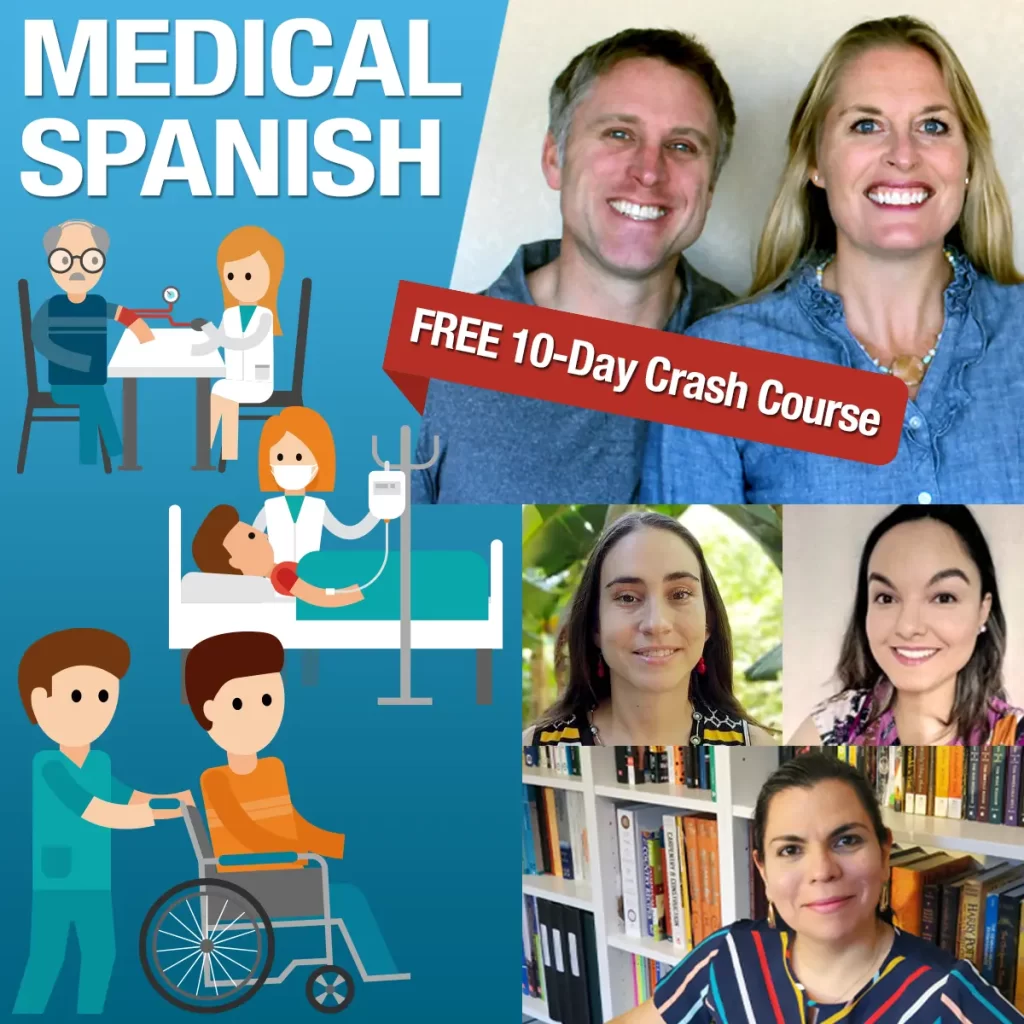
- Free Medical Spanish Crash Course: An accredited no-cost entry point for providers exploring medical Spanish training before committing to a full program.
The Digital Transformation of CME
The shift to digital CME has expanded access significantly for busy clinicians. Modern platforms offer:
• Mobile-first access: Complete accredited modules during clinical transition periods without dedicated study blocks.
• Automated compliance tracking: Integrated dashboards track credit progress with automated certificate issuance and cloud storage for license audit retrieval.
• Self-paced learning: Video-on-demand and interactive quizzes allow providers to confirm mastery before advancing to complex clinical topics.
• Virtual live interaction: Webcasts maintain the collaborative dimension of medical education without travel or time away from practice.
Benefits of CME Courses for Your healthcare Career
Our CME courses provide key advantages for healthcare professionals:
Meet Licensure Needs:
Fulfill state and board requirements, such as the 30 hours of CME every 5 years in some regions or specific U.S. state mandates.
Flexible Learning:
Benefit from a learner-centered approach that supports ongoing professional development and high-quality patient care.

Online CME:
Courses can be completed entirely online at your own pace, allowing you to fit learning into your schedule.
Flexible Access:
Enjoy convenient access to course materials anytime, anywhere.

Cost Efficiency:
Take advantage of opportunities to save on tuition or course fees through available discounts.
Enhance Patient Safety:
Apply best practices to minimize errors and elevate care quality.
Sign up here to join our next session!
Professional Development and Lifelong Learning
Fulfilling CME requirements is more than a compliance obligation. Healthcare professionals who invest in medical Spanish training serve a growing patient population more effectively, reduce language-based errors, and deliver equitable care across language differences. The ability to communicate directly in Spanish is a lasting professional skill that improves with every patient interaction.
CME and Medical Specialties
CME requirements vary by specialty, and fields including primary care, emergency medicine, obstetrics, and pediatrics have particularly high rates of Spanish-speaking patient interactions. Specialty-specific CME ensures learning is clinically relevant to your practice environment. Common Ground International’s medical Spanish curriculum includes case studies specific to emergency medicine, while vocabulary and communication skills developed apply across specialties.
How to Select the Right CME Course
Choose the best CME course by considering:
• Accreditation: Verify the program meets your specific state or board requirements.
• Specialty relevance: Select topics aligned with your daily clinical environment and patient population.
• Format flexibility: Choose self-paced online modules or live virtual sessions based on your schedule.
• Career goals: Select programs that support your professional direction — primary care, emergency medicine, specialty practice, or community health.
• Cost efficiency: Explore free options as entry points before investing in longer certification programs.
Frequently Asked Questions
Start Your CME Journey Today
Common Ground International’s CME courses empower healthcare professionals to stay current, meet requirements, and excel in patient care. Join our CME community to connect with other learners and primary care physicians, and benefit from collaborative continuing medical education initiatives.
Explore our CME courses today to thrive in the evolving healthcare landscape.