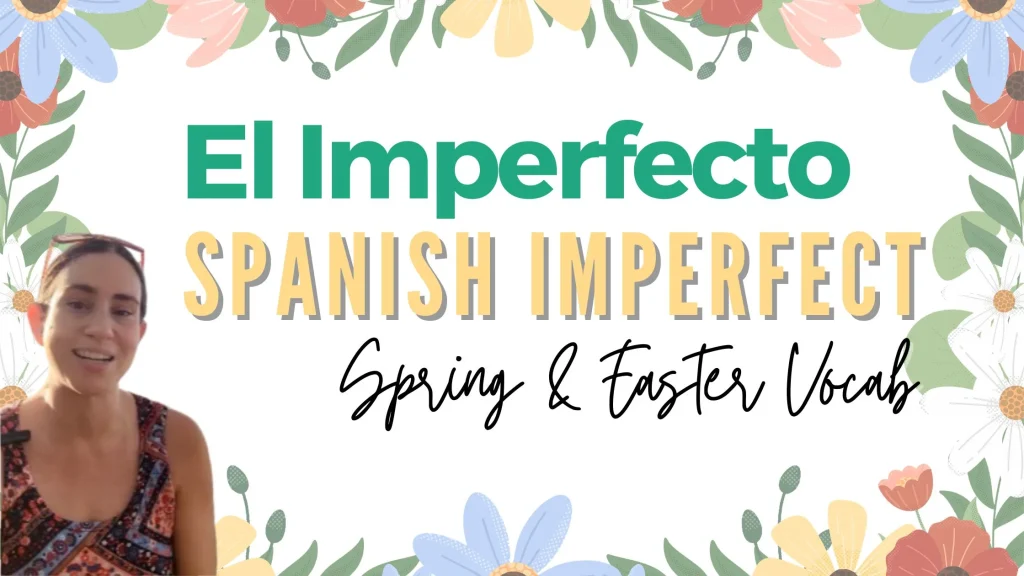
When talking about past habits and experiences, the Spanish imperfect “used to” form is essential because it helps describe repeated actions over time. In this lesson, you’ll learn how to use it with spring and Easter vocabulary to talk about spring break, family traditions, and what you used to do in the past. Watch the short video lesson below to see how it all comes together in real examples and start building more natural, fluent Spanish today.
The imperfect past tense in Spanish is used to describe ongoing actions, habits, and background details in the past, while the preterite focuses on completed actions with clear beginnings and endings. The imperfect answers “what you used to do” or “what was happening,” while the preterite tells “what happened.” Understanding how these two tenses work together is key to sounding natural in Spanish. You can check out our CGI Spanish Lab series to learn more about how these two tenses work and how to use them confidently in real conversations.
The Spanish Imperfect Conjugations
The imperfect tense is also one of the easiest past tenses to learn because its conjugations are very consistent. All -AR verbs are regular, and -ER and -IR verbs follow the same pattern, which makes memorization much simpler. There are only three irregular verbs in the imperfect: ser, ir, and ver. Once you learn these patterns, you can apply them to everyday verbs. Take a look at the table below to see how these conjugations work.
| Verbo AR | Hablar (to talk, to speak) | Verbo ER / IR | Aprender (to learn) | |
| Yo | -aba | hablaba | -ía | aprendía |
| Tú | -abas | hablabas | -ía | aprendías |
| Él / ella / usted | -aba | hablaba | -ía | aprendía |
| Nosotros / -as | -ábamos | hablábamos | -ía | aprendíamos |
| Ellos /-as / ustedes | -aban | hablaban | -ía | aprendían |
As you can see from the table above, the conjugations are pan comido for the Spanish imperfect tense to say “used to”.
Spanish Impefect Irregular Verbs: Ser, Ir, and Ver
There are only three irregular verbs in the imperfect: ser, ir, and ver, which makes this tense much easier than others. The verb ser is especially important because it is used for descriptions in the past and to express what something used to be like. The verb ir is used for “went” or “used to go,” while ver is only slightly irregular and very close to the regular pattern, making it easy to remember.
| Ser (to be) | Ir (to go) | Ver (to see) | |
| Yo | era | iba | veía |
| Tú | eras | ibas | veías |
| Él / ella / usted | era | iba | veía |
| Nosotros / -as | éramos | íbamos | veíamos |
| Ellos /-as / ustedes | era | iban | veían |
Spanish Imperfect “used to” to Talk About Routines in the Past
The Spanish imperfect is the tense you use to express what you “used to” do or what you would do regularly in the past. Instead of focusing on one specific completed event, the imperfect describes actions that happened over and over again or were part of your normal routine. This makes it especially useful when talking about things like spring break activities, childhood experiences, and everyday habits from the past.
Sentence Starters to Use the Spanish Imperfect Today
Starter phrases like cuando, antes, siempre, todos los…, and durante…. are helpful because they signal that you are talking about repeated actions, habits, or ongoing time periods in the past, which naturally calls for the imperfect tense. They give context and make it clear that the action happened regularly, not just once. Using these expressions will help you choose the correct tense and sound more natural when describing what you used to do in Spanish. Here are some important Sentence Starters you can use, along with some examples.
| Sentence Starter | Example in Spanish | English |
| Cuando | era niña, creía en el conejito de Pascua. | When I was a child, I used to believe in the Easter Bunny. |
| Antes | comíamos jamón para la cena del domingo de Pascua y celebrábamos en familia. | We used to eat ham for Easter Sunday dinner and would celebrate as a family. |
| Siempre | buscaba huevos de Pascua y mi hermano los escondía. | I would look for Easter eggs, and my brother would hide them. |
| Todos los… (años, meses, días, etc.) | años, mi mamá hacía una fiesta de Pascua donde mis amigas y yo aprendíamos a decorar huevos. | Every year, my mom would throw an Easter party where my friends and I would learn how to decorate eggs. |
| Durante | las vacaciones de primavera, cuando era adolescente, iba a Europa para ver a mi padre. ¡Volaba sola desde los trece años! | During spring break, when I was a teenager, I used to go to Europe to see my father. I even would fly alone starting at age thirteen! |
If this blog piqued your interest, you can learn more about the differences between the preterite and imperfect by checking out our blog on 5 Spanish Verbs That Change Meaning in the Past Tense.