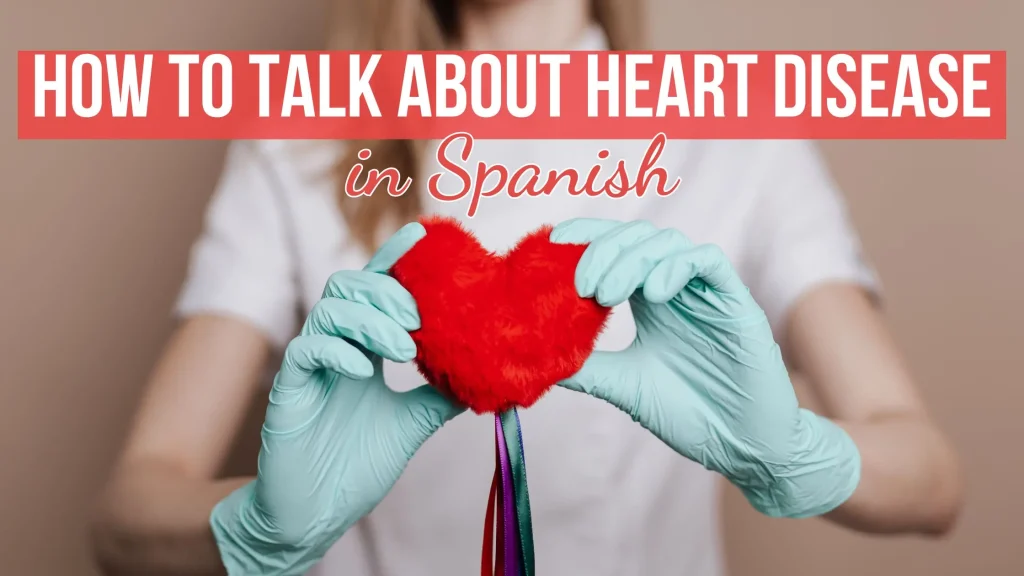
Heart disease is one of the most common health concerns worldwide, making it essential for healthcare professionals to communicate clearly with Spanish-speaking patients. Whether you’re working in primary care, cardiology, nursing, or emergency medicine, having the right Medical Spanish vocabulary and phrases can greatly improve patient understanding and trust.
In this post, you’ll learn:
- Essential heart disease vocabulary in Spanish
- Common cardiac conditions and their explanations
- Useful doctor–patient questions and phrases
- How to explain symptoms, tests, and lifestyle recommendations
Key Vocabulary: The Heart and Cardiovascular System
Let’s start with essential anatomy and general terms.
- El corazón – the heart
- Las arterias – arteries
- Las venas – veins
- La sangre – blood
- La presión arterial – blood pressure
- El ritmo cardíaco – heart rhythm
- El sistema cardiovascular – cardiovascular system
Helpful verbs
- bombear – to pump
- latir – to beat
- obstruir – to block
- circular – to circulate
Common Heart Conditions in Spanish
Here are some of the most frequent heart-related conditions you’ll hear in clinical settings:
1. Enfermedad cardíaca / enfermedad del corazón
Heart disease (general term)
- La enfermedad cardíaca afecta la función del corazón.
(Heart disease affects the function of the heart.)
2. Hipertensión (presión alta)
High blood pressure
- La hipertensión puede dañar el corazón con el tiempo.
(High blood pressure can damage the heart over time.)
3. Infarto / ataque al corazón
Heart attack
- Un infarto ocurre cuando se bloquea una arteria.
(A heart attack happens when an artery is blocked.)
4. Insuficiencia cardíaca
Heart failure
- La insuficiencia cardíaca significa que el corazón no bombea bien.
(Heart failure means the heart doesn’t pump well.)
5. Arritmia
Irregular heartbeat
- La arritmia causa latidos irregulares o rápidos.
(An arrhythmia causes irregular or fast heartbeats.)
6. Colesterol alto
High cholesterol
- El colesterol alto aumenta el riesgo cardíaco.
(High cholesterol increases heart risk.)
Asking About Heart-Related Symptoms
These are key questions you can ask during patient intake or evaluation.
- ¿Tiene dolor en el pecho?
Do you have chest pain? - ¿Siente presión u opresión en el pecho?
Do you feel pressure or tightness in your chest? - ¿Le falta el aire?
Are you short of breath? - ¿Ha tenido palpitaciones?
Have you had palpitations? - ¿Se marea o se siente débil?
Do you feel dizzy or weak? - ¿El dolor se irradia al brazo, cuello o mandíbula?
Does the pain radiate to your arm, neck, or jaw?
Vocabulary note
- dolor – pain
- opresión – pressure/tightness
- mareo – dizziness
Talking About Risk Factors
Explaining risk factors is a key part of preventive care.
- ¿Tiene antecedentes familiares de enfermedad cardíaca?
Do you have a family history of heart disease? - ¿Fuma o ha fumado anteriormente?
Do you smoke or have you smoked before? - ¿Tiene diabetes o presión alta?
Do you have diabetes or high blood pressure? - ¿Hace actividad física regularmente?
Do you exercise regularly? - ¿Cómo es su alimentación?
What is your diet like?
Explaining Tests and Procedures
Here are common phrases to explain cardiac tests:
- Vamos a medir su presión arterial.
We’re going to measure your blood pressure. - Necesitamos hacer un electrocardiograma (ECG / EKG).
We need to do an electrocardiogram. - Este examen evalúa el ritmo del corazón.
This test evaluates heart rhythm. - Es un procedimiento rápido e indoloro.
It’s a quick and painless procedure.
Giving Recommendations and Lifestyle Advice
Lifestyle counseling is essential in heart disease management.
- Es importante reducir el consumo de sal.
It’s important to reduce salt intake. - Le recomendamos hacer ejercicio regularmente.
We recommend exercising regularly. - Evite fumar y el consumo de alcohol.
Avoid smoking and alcohol use. - No es necesario hacer todos los cambios a la vez.
You don’t need to make all the changes at once. - Poco a poco, los cambios ayudan al corazón.
Little by little, changes help the heart.
Reassuring and Educating the Patient
These phrases help build trust and reduce anxiety:
- Estamos aquí para ayudarle.
We’re here to help you. - Vamos a explicarle todo paso a paso.
We’ll explain everything step by step. - Si tiene preguntas, no dude en decirnos.
If you have questions, don’t hesitate to tell us.
Learning how to talk about heart disease in Spanish allows healthcare professionals to provide safer, more compassionate, and more effective care. Even using simple, clear phrases can make a major difference in patient understanding and outcomes.