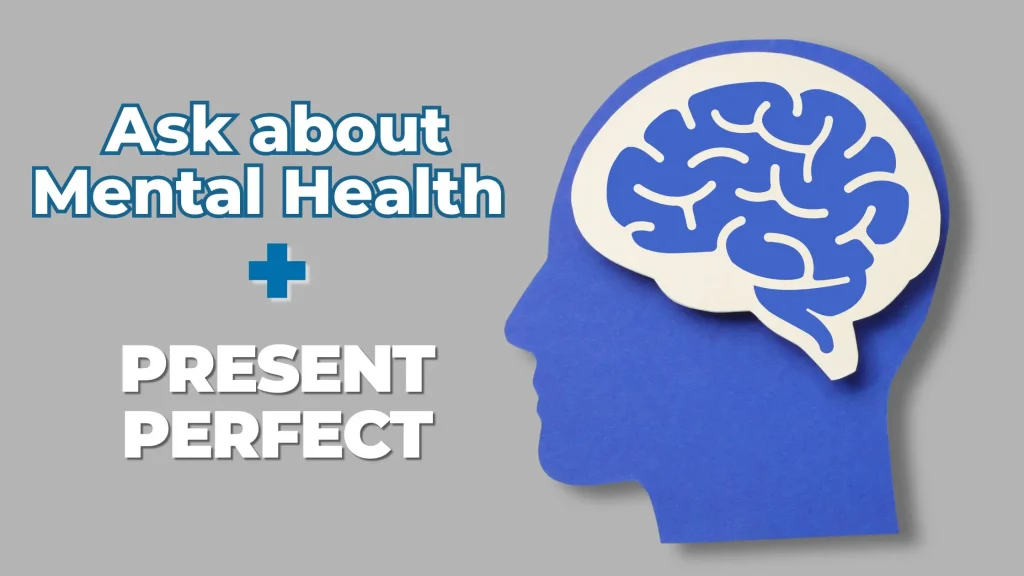
The present perfect in medical Spanish is especially useful when asking about recent or ongoing mental health concerns. Common examples include ¿Ha tenido ansiedad?, ¿Se ha sentido deprimido/a?, and ¿Han empeorado los síntomas? These questions help providers ask about experiences that are still relevant to the patient now.
In this blog, we will look at three practical ways to use the present perfect in mental health Spanish: asking about symptoms and experiences with ha tenido and ha notado, asking about feelings with reflexive verbs such as se ha sentido, and discussing changes over time with phrases like han empeorado and han mejorado. Follow along with each reel to hear the structures in context and learn useful phrases you can use with Spanish-speaking patients.
How to Form the Present Perfect in Medical Spanish
The present perfect in medical Spanish is formed with haber + a past participle and is commonly used to talk about symptoms, experiences, medications, and changes that are relevant to the present. Useful verbs with regular past participles in mental health medical Spanish discussions include tener, dormir, tomar, and notar. The table below shows how to form these verbs using the usted and yo forms.
| Haber | Tener | Dormir | Tomar | Notar | |
| yo | he | tenido | dormido | tomado | notado |
| él / ella / usted | ha | tenido | dormido | tomado | notado |
As you can see, the present perfect follows a consistent pattern with many common verbs. In this blog, we are focusing on just a handful of useful verbs for mental health conversations. Remember that some past participles are irregular, so you may also want to review the irregular past participles before using the present perfect in other medical situations.
Reflexive Present Perfect Verbs in Mental Health
Reflexive verbs are also common when using the present perfect in mental health Spanish. They are useful for asking about how a patient has felt or whether they have harmed themselves, with phrases such as ¿Cómo se ha sentido? and ¿Se ha hecho daño? In these structures, the reflexive pronoun comes before haber.
| Pronoun | Haber | Sentir | Hacer daño | Lastimar | |
| yo | me | he | sentido | hecho daño | lastimado |
| él / ella / usted | se | ha | sentido | hecho daño | lastimado |
As you can see, reflexive verbs follow the same present perfect structure, with the reflexive pronoun placed before haber. Keep in mind that some verbs, such as hacer, have irregular past participles.
Present Perfect in Medical Spanish for Mental Health: Plural Subjects
When talking about plural subjects in mental health Spanish, the present perfect can be used to describe changes in symptoms, behaviors, or other concerns over time. In these cases, use han + past participle.
| Example | Haber | Mejorar | Empeorar | |
| ellos / ellas / ustedes | los síntomas | han | mejorado | empeorado |
| ellos / ellas / ustedes | los cambios de estado de ánimo | han | mejorado | empeorado |
For plural subjects, the present perfect uses han + past participle. This form is used with ellos, ellas, and ustedes, as well as with plural nouns such as los síntomas or los cambios. In mental health conversations, it is especially useful for describing how symptoms or other concerns have changed over time.
How Can I Continue Learning More?
At CGI, we are always creating new courses and content for medical professionals and general Spanish needs. Take a look at our asynchronous courses, like this one all about mental health for medical professionals or if you are a medical professional, our FREE 10-day crash course is starting soon.