
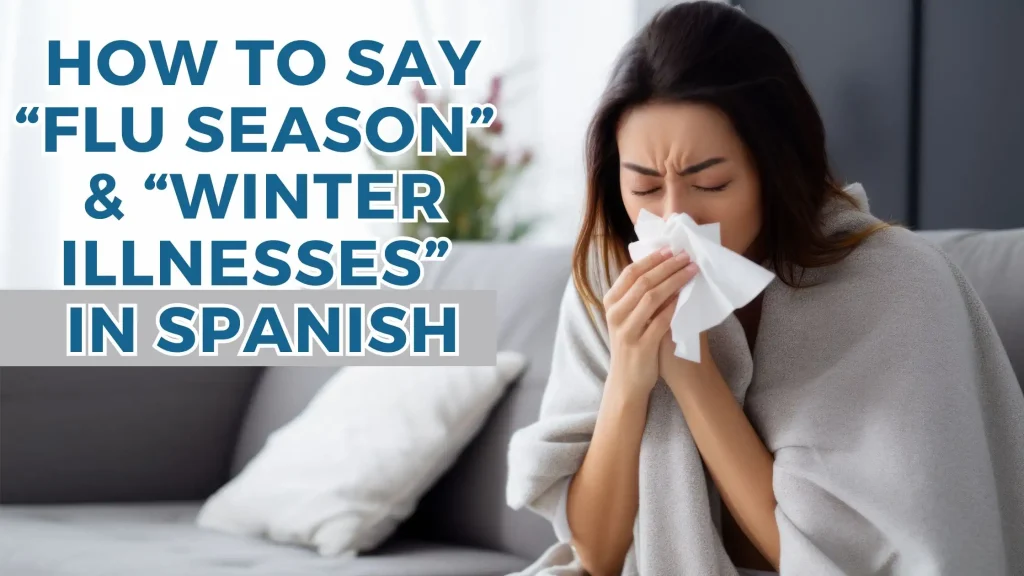
The holiday season often brings cold weather, travel, family gatherings… and unfortunately, more cases of influenza, colds, respiratory infections, and other winter illnesses. If you work with Spanish-speaking patients, this time of year is the perfect moment to strengthen your Medical Spanish for flu season.
In this post, you’ll learn essential vocabulary, phrases, and explanations to help you give advice, ask questions, and communicate clearly during winter illness season.
❄️ How to Say “Flu Season” and “Winter Illnesses” in Spanish
Here are the core expressions you’ll want to know:
- La temporada de gripe / La temporada de influenza – Flu season
- Enfermedades respiratorias – Respiratory illnesses
- Enfermedades del invierno – Winter illnesses
- El resfriado / El resfriado común – Common cold
- La tos – Cough
- La fiebre – Fever
- La congestión nasal – Nasal congestion
- El dolor de garganta – Sore throat
- La dificultad para respirar – Difficulty breathing
- Los síntomas – Symptoms
- El contagio – Transmission
🩺 How to Ask Patients About Symptoms in Spanish
These are high-frequency questions for flu and winter illness evaluation:
1. “Do you have a fever?”
¿Tiene fiebre?
2. “How long have you had symptoms?”
¿Hace cuánto tiempo que tiene los síntomas?
3. “Are your symptoms getting better or worse?”
¿Sus síntomas están mejorando o empeorando?
4. “Do you have shortness of breath?”
¿Tiene dificultad para respirar?
5. “Is anyone else at home sick?”
¿Hay alguien más enfermo en su casa?
6. “Do you have chills or body aches?”
¿Tiene escalofríos o dolores en el cuerpo?
🧪 Explaining Diagnoses and Conditions
“It looks like the flu.”
Parece que tiene gripe / influenza.
“This is likely a viral infection.”
Probablemente es una infección viral.
“Right now many people have this illness.”
En este momento, muchas personas tienen esta enfermedad.
“It is contagious.”
Es contagiosa / Se puede contagiar.
💊 Treatment and Care Instructions in Spanish
Use these phrases to give clear guidance:
Rest & Hydration
- Descanse y tome muchos líquidos.
Rest and drink plenty of fluids.
Medications
- Puede tomar medicamentos para bajar la fiebre.
You can take medication to reduce the fever. - Es importante seguir las instrucciones de la medicina.
It’s important to follow the medicine instructions.
When to return or seek care
- Regrese si tiene dificultad para respirar.
Come back if you have trouble breathing. - Si los síntomas empeoran, vuelva a la clínica.
If symptoms worsen, return to the clinic. - Busque atención médica inmediata si tiene dolor en el pecho.
Seek medical care right away if you have chest pain.
🛡️ Preventive Advice for Flu Season (in Spanish)
These phrases help you communicate holiday and winter prevention tips:
- Lávese las manos con frecuencia.
Wash your hands often. - Evite el contacto cercano con personas enfermas.
Avoid close contact with sick people. - Use mascarilla si tiene síntomas.
Wear a mask if you have symptoms. - Es recomendable ponerse la vacuna contra la gripe.
It is recommended to get the flu vaccine. - Desinfecte las superficies que se tocan con frecuencia.
Disinfect frequently touched surfaces.
🎄 Holiday-Specific Phrases for Healthcare Settings
Many winter illnesses spread during gatherings and travel. These phrases help you explain holiday risks:
“During the holidays, respiratory illnesses increase.”
Durante las fiestas, aumentan las enfermedades respiratorias.
“Family gatherings can increase the risk of contagion.”
Las reuniones familiares pueden aumentar el riesgo de contagio.
“If you feel sick, avoid close contact with others.”
Si se siente enfermo, evite el contacto cercano con otras personas.
“Travel can expose you to more viruses.”
Viajar puede exponerlo a más virus.
🧑⚕️ Reassurance & Empathy Phrases
These are incredibly useful in healthcare communication:
- Entiendo que no se siente bien. – I understand you’re not feeling well.
- Vamos a ayudarle a sentirse mejor. – We’re going to help you feel better.
- Lo estamos cuidando. – We’re taking care of you.
- Sé que no es fácil estar enfermo durante las fiestas. – I know it’s not easy to be sick during the holidays.
Supporting Spanish-speaking patients during flu season is especially important around the holidays. With these phrases and vocabulary, you’ll be able to ask questions clearly, explain diagnoses with confidence, and provide compassionate patient care.


Excellent chapters that are clinical , day to day practice for those working in a hospital setting , ER , clinics and even in families if there is a medical person in the family . Love the videos as well
Thanks, Geetha! We love that you find it useful!