If you travel to Argentina—especially during Carnival season—you’ll likely hear the words murga and corso. These terms are deeply connected to Argentine culture, music, dance, and community celebrations, but they don’t have a direct translation in English.
What Is a Murga?
A murga is a traditional form of popular musical theater that combines:
- Music
- Dance
- Singing
- Percussion
- Social or political commentary
Murgas are most commonly seen during Carnival (Carnaval), especially in Buenos Aires, though they also exist in other parts of Argentina with regional variations.
Key characteristics of a murga:
- Large groups of performers (often dozens)
- Colorful, sequined costumes
- High-energy choreography with jumps and kicks
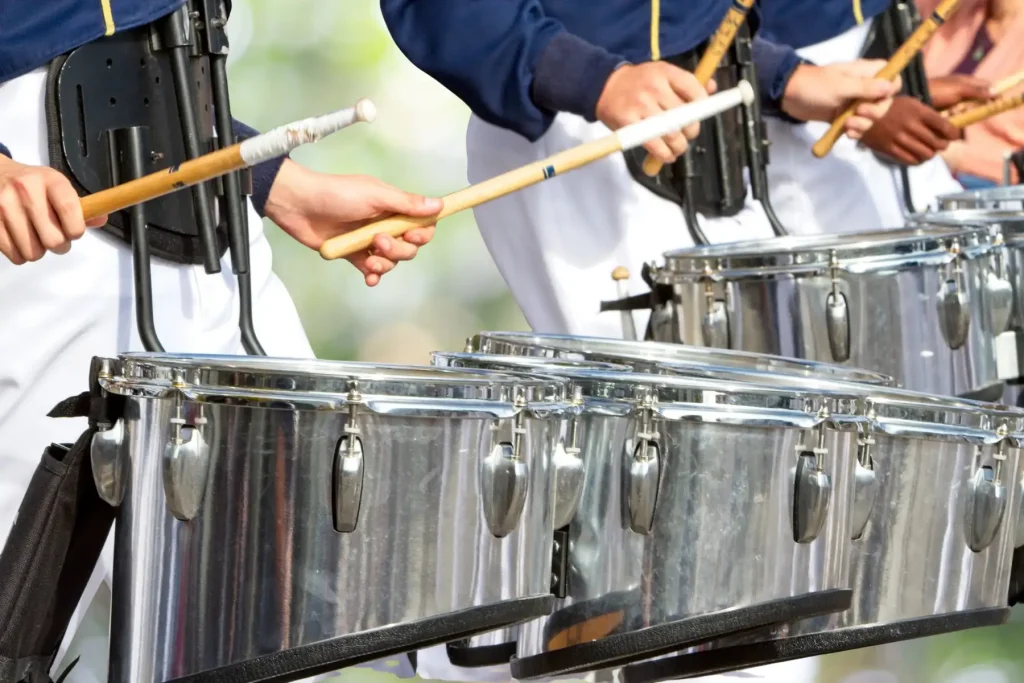
- Strong percussion rhythms (especially drums)
- Lyrics that often comment on social issues, politics, or everyday life
Useful vocabulary
- La murga – murga group / performance
- Los murgueros / las murgueras – murga performers
- El bombo – bass drum
- El ritmo – rhythm
- El canto – singing
Example sentences
- La murga es una expresión cultural muy popular en Argentina.
(Murga is a very popular cultural expression in Argentina.) - Los murgueros cantan y bailan durante el Carnaval.
(Murga performers sing and dance during Carnival.)
What Is a Corso?
A corso is the Carnival parade or public celebration space where murgas and other groups perform.
Think of a corso as:
- A neighborhood street festival
- A parade route
- A community gathering during Carnival
Corsos usually take place outdoors, often on closed streets, and are free and open to the public.
What happens at a corso?
- Murgas perform choreographed routines
- Live music and drumming
- Dancing and crowd participation
- Food stands and local vendors
- A strong neighborhood, family-friendly atmosphere
Useful vocabulary
- El corso – Carnival parade / event
- El Carnaval – Carnival
- El desfile – parade
- El barrio – neighborhood
- La fiesta popular – community celebration
Example sentences
- El corso se hace en las calles del barrio.
(The corso takes place in neighborhood streets.) - Durante el Carnaval, hay corsos todos los fines de semana.
(During Carnival, there are corsos every weekend.)
When Do Murgas and Corsos Take Place?
In Argentina, Carnival usually happens in:
- February or early March
In cities like Buenos Aires, corsos are typically held:
- On weekends
- At night
- Across many neighborhoods simultaneously
Example
- En febrero, Buenos Aires se llena de murgas y corsos.
(In February, Buenos Aires fills with murgas and corsos.)
Why Are Murgas and Corsos Important in Argentina?
Murgas and corsos are more than entertainment—they are a form of:
- Cultural identity
- Community expression
- Historical resistance and social commentary
Many murgas reflect:
- Working-class traditions
- Immigration history
- Political humor and criticism
- Pride in local neighborhoods
This makes them fascinating for learners, and a great cultural immersion opportunity.
Common Phrases You Might Hear
- ¡Arriba la murga! – Long live the murga!
- Vamos al corso – Let’s go to the corso
- Es una tradición del barrio – It’s a neighborhood tradition
- La murga representa al barrio – The murga represents the neighborhood
Understanding murgas and corsos helps you go beyond textbook Spanish and connect with Argentine culture at a deeper level. These traditions show how language, music, history, and community all come together—especially during Carnival.
If you ever experience a corso in Argentina, you’re not just watching a performance—you’re witnessing living culture.
🌎 Want to experience Argentine culture and Spanish in real life?
Our Spanish Immersion Programs in Argentina, as well as Costa Rica, Ecuador, and Chile, allow participants to live with host families, practice Spanish daily, and engage directly with local traditions while we take care of all the logistics.