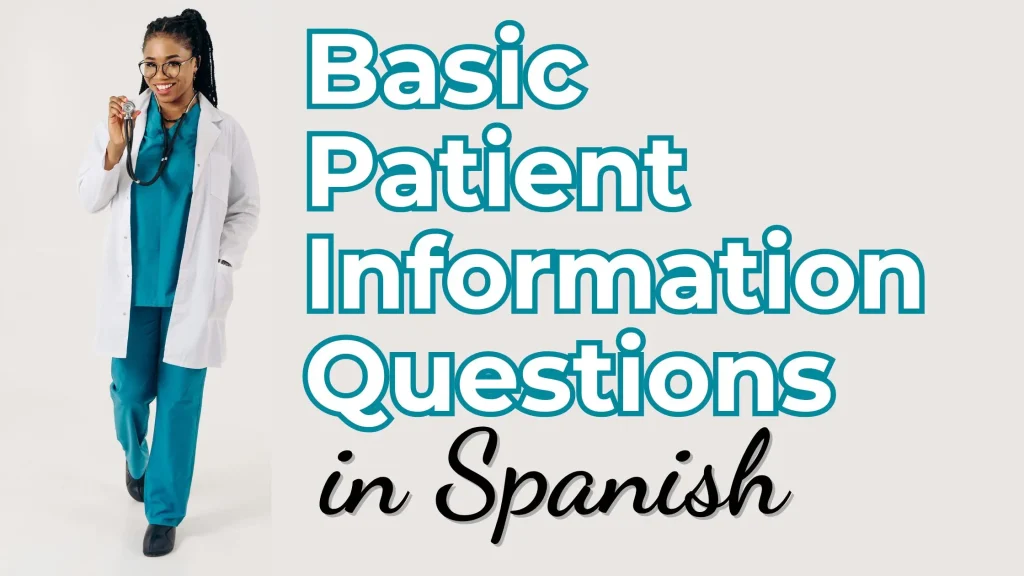
When first meeting a patient, gathering basic demographic and administrative information is essential. For healthcare professionals working with Spanish-speaking patients, knowing how to ask these questions clearly and respectfully can set the tone for the entire visit.
In this post, you’ll learn essential Medical Spanish phrases to ask about a patient’s name, age, address, contact information, insurance, and emergency contacts, along with helpful vocabulary and usage tips.
Why These Questions Matter in Healthcare
Asking basic patient information questions helps you:
- Verify identity
- Ensure accurate documentation
- Understand insurance coverage
- Know who to contact in an emergency
- Build trust from the very beginning of the encounter
Even if you don’t speak perfect Spanish, using these phrases shows effort and professionalism — something patients deeply appreciate.
Asking a Patient’s Name
Key phrases
- ¿Cómo se llama?
What is your name? (formal) - ¿Cuál es su nombre completo?
What is your full name? - ¿Cómo se escribe su apellido?
How do you spell your last name?
Tip
In healthcare settings, usted (formal “you”) is almost always the appropriate choice.
Asking About Age and Date of Birth
Common phrases
- ¿Cuántos años tiene?
How old are you? - ¿Cuál es su fecha de nacimiento?
What is your date of birth? - ¿Qué edad tiene el paciente?
How old is the patient? (when speaking to a caregiver)
Vocabulary note
- años = years
- fecha de nacimiento = date of birth
Asking About Address and Residence
Useful phrases
- ¿Cuál es su dirección?
What is your address? - ¿En qué ciudad vive?
What city do you live in? - ¿En qué país reside actualmente?
Which country do you currently live in?
Key vocabulary
- dirección – address
- ciudad – city
- estado / provincia – state / province
- código postal – zip code
Asking for Phone Number and Contact Information
Common phrases
- ¿Cuál es su número de teléfono?
What is your phone number? - ¿Es este un buen número para contactarlo/la?
Is this a good number to contact you? - ¿Tiene un correo electrónico?
Do you have an email address?
Tip
Spanish often uses lo / la to refer respectfully to the patient:
- contactarlo (male patient)
- contactarla (female patient)
Asking About Emergency Contacts
This is especially important in hospitals, clinics, and urgent care settings.
Key phrases
- ¿Tiene un contacto de emergencia?
Do you have an emergency contact? - ¿Cómo se llama su contacto de emergencia?
What is the name of your emergency contact? - ¿Cuál es su relación con usted?
What is their relationship to you? - ¿Cuál es su número de teléfono?
What is their phone number?
Vocabulary
- contacto de emergencia – emergency contact
- esposo/a – husband / wife
- hijo/a – son / daughter
- familiar – family member
Asking About Insurance Information
Insurance questions can feel sensitive, so clarity and tone matter.
Common phrases
- ¿Tiene seguro médico?
Do you have health insurance? - ¿Qué tipo de seguro tiene?
What type of insurance do you have? - ¿Trajo su tarjeta de seguro?
Did you bring your insurance card? - ¿Este seguro está vigente?
Is this insurance currently active?
Vocabulary
- seguro médico – health insurance
- tarjeta – card
- vigente – valid / active
Asking About Primary Care Providers
Useful phrases
- ¿Tiene médico de cabecera?
Do you have a primary care provider? - ¿Quién es su médico principal?
Who is your main doctor? - ¿En qué clínica se atiende normalmente?
Which clinic do you usually go to?
Asking About Preferred Language
This is an important step in providing patient-centered care.
- ¿Prefiere hablar en español o en inglés?
Do you prefer to speak Spanish or English? - ¿Necesita un intérprete?
Do you need an interpreter?
Helpful Polite Phrases to Use Throughout
These phrases help keep the interaction respectful and smooth:
- Por favor – please
- Gracias – thank you
- Un momento, por favor – one moment, please
- Voy a hacerle unas preguntas básicas
I’m going to ask you a few basic questions
Learning how to ask basic patient information questions in Spanish is one of the most practical and high-impact skills for healthcare professionals. These phrases are often repeated daily — meaning the more you use them, the more confident you’ll feel.