
What Is a Spanish Immersion Program for Teens?
A Spanish immersion program for teens is an intensive language-learning experience where Spanish is used as the primary language for learning, communication, and daily life. Instead of treating Spanish as a school subject limited to a classroom, immersion places teens in structured environments where Spanish is the default language they hear and use throughout the day. The goal is practical communication and real-world comprehension, not just memorizing vocabulary lists or grammar rules.
Spanish immersion for teens typically combines language classes with cultural immersion. The classroom portion provides instruction in grammar, vocabulary, pronunciation, and conversation strategies. The cultural portion creates frequent opportunities to practice Spanish with native speakers in meaningful contexts, such as meals, activities, excursions, and everyday conversations. The result is often faster gains in listening comprehension, speaking confidence, and functional vocabulary compared to traditional language courses alone.
What “Immersion” Means in Practice
Immersion is not one single format. It is a spectrum of how much Spanish is used and how often teens are required to rely on it. In strong immersion settings, teens spend most of their day receiving Spanish input and are encouraged to respond in Spanish as much as possible. The more consistent the exposure, the more likely students are to begin thinking in Spanish rather than translating word-by-word from English.
A true immersion environment includes multiple “inputs” and “outputs” each day:
- Input: hearing Spanish from teachers, host families, peers, guides, and community members
- Output: speaking Spanish during class, activities, and day-to-day interactions
- Feedback: correction and coaching from instructors or trained staff in a supportive way
- Repetition: encountering the same phrases and language patterns in different contexts
Over time, repetition and context help teens internalize language patterns naturally.
Common Types of Teen Spanish Immersion Programs

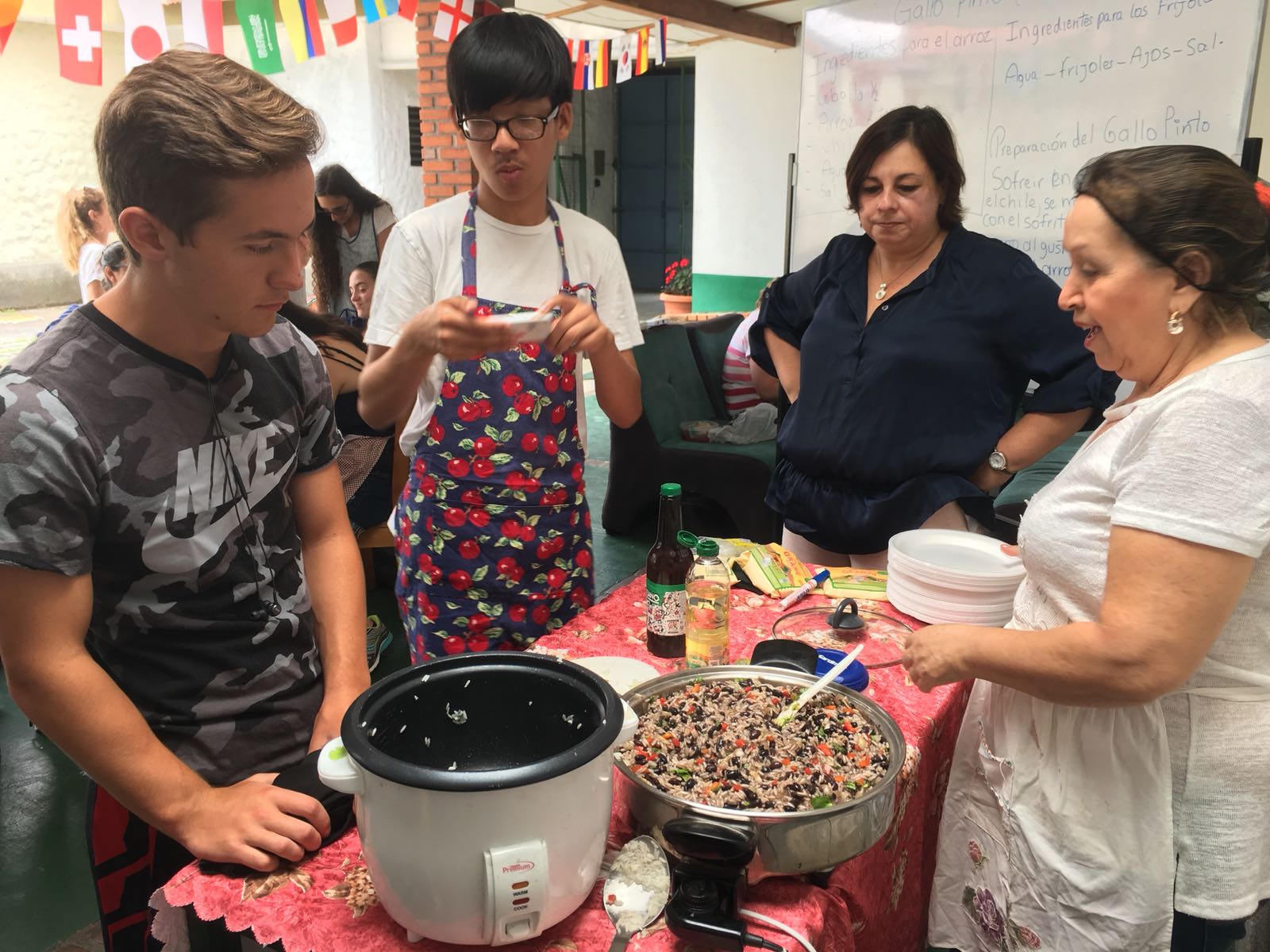
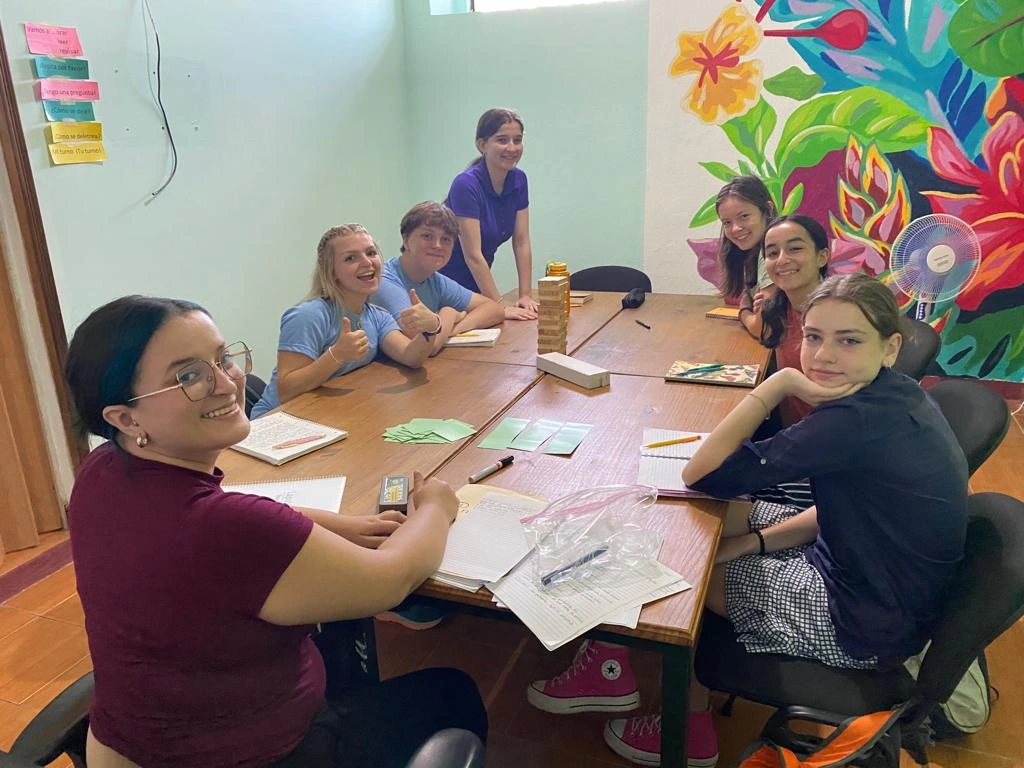
This model uses structured Spanish classes, often taught by native-speaking instructors, and combines them with supervised cultural experiences. Teens practice Spanish while participating in local activities that create natural speaking opportunities.

A host family stay can be one of the strongest immersion components because it increases language exposure outside of class. Meals, routines, and everyday conversation become part of the learning experience. Host family immersion works best when there are clear expectations for participation and support.
Some teen programs house students together in a supervised setting while still providing immersion through classes, planned activities, and controlled interaction with native speakers. This can be a good fit for teens who want more peer-based social structure while still practicing Spanish daily, but the challenge is to keep the students speaking Spanish to each other during down time.
These often resemble youth travel programs but with language learning integrated into the schedule. The immersion element comes from structured daily Spanish use, supervised movement throughout the day, and organized language practice with native speakers.
Student
Parent
Why Spanish Immersion Works for Teens
Immersion works because language learning is not just intellectual—it’s neurological. When teens receive frequent Spanish input, their brain begins recognizing patterns and predicting meaning. That reduces the mental load of translation and increases comprehension speed. Over time, speaking becomes more automatic.
Teens often benefit because:
- They’re still in a strong learning window for language acquisition
- They adapt quickly to new routines and environments
- They tend to absorb pronunciation and rhythm faster than adults
- They often gain confidence quickly when the environment is supportive
In addition to language skills, immersion often helps teens become more comfortable communicating when they do not have perfect words. That ability—communicating despite gaps—is one of the biggest drivers of real-world fluency.
What Teens Typically Learn in an Immersion Setting
A well-structured teen Spanish immersion experience focuses on practical outcomes. Most programs emphasize:
- Listening comprehension: understanding spoken Spanish in real-time
- Speaking and conversation: forming sentences under time pressure
- Pronunciation: improving clarity and confidence
- Vocabulary growth: high-frequency words used in daily life
- Grammar foundations: common verb tenses and sentence structure
- Cultural competence: understanding context, politeness, and real-life usage
A key concept for immersion success is “high-frequency language.” Teens often learn everyday phrases they can reuse immediately, such as ordering food, asking questions, making plans, and describing needs.
How Placement and Levels Typically Work
Many teen immersion programs use a placement approach, even if it’s informal. Teens may be grouped by proficiency level so instruction matches their ability. Levels are often described using common language terms (beginner, intermediate, advanced) or referenced in terms of CEFR-style ranges (A1 to C1). In general:
Beginners focus on survival communication and foundational grammar
Intermediate learners focus on longer conversation, accuracy, and confidence
Advanced learners focus on fluency, nuance, and more complex topics
Grouping matters because it keeps teens challenged without overwhelming them.
What Makes a Teen Program Different From an Adult Program
Teen immersion programs are typically more structured than adult programs. They often include:
- Supervised schedules
- Group leaders or staff oversight
- Clear rules and boundaries
- Age-appropriate activities
- More emphasis on emotional support and adjustment
Adults may choose a flexible, independent language school experience. Teens generally benefit from built-in structure to maintain safety, accountability, and consistent practice.
What to Look For When Evaluating a Program
If you’re deciding whether a teen Spanish immersion program is the right fit, it helps to evaluate the structure rather than just the marketing. Practical questions include:
- How many hours of Spanish instruction are included?
- How much Spanish is used outside the classroom?
- Are host families part of the immersion experience?
- Is the program supervised throughout the day?
- How are teens grouped by level?
- What support exists for shy or anxious learners?
- How does the program encourage speaking without embarrassment?
A strong program typically has both: structured instruction and structured opportunities to use Spanish.
Common Ground International
Impacting Communities Through Language
© 2026. All Rights Reserved.
(888) 879-2575