
How Fast Can Teens Improve Spanish Through Immersion?
Teens can improve Spanish quickly through immersion because the learning environment is intense, repetitive, and practical. Instead of seeing Spanish a few times a week, teens are exposed to it throughout the day in meaningful contexts. That density of exposure accelerates listening comprehension, boosts speaking confidence, and helps vocabulary stick through repetition.
However, “how fast” depends on the teen’s starting level, participation, and the structure of the program. Some teens improve dramatically in a short time. Others improve steadily but more quietly, especially if they start anxious or hesitant. In almost all cases, immersion produces noticeable gains because it compresses weeks or months of exposure into a short period.
Why Immersion Feels Faster Than Classroom Spanish
Traditional learning typically amounts to a few hours a week of contact with Spanish and often separates language into categories: vocabulary lists, grammar units, and test preparation. Immersion compresses those categories into real-time communication and exposes teens to several hours of Spanish per day. The teen is surrounded by Spanish all day long and must understand Spanish to function, and that creates:
- Drastically more Spanish input to support learning
- Higher attention and focus
- More frequent repetition
- Immediate context for meaning
- More opportunities to speak and be corrected gently
When Spanish becomes the default communication tool, improvement often accelerates.
Comprehension Starts to Click
In the first several days, teens often notice:
- Better recognition of common phrases
- More comfort hearing Spanish at natural speed
- Less panic when they don’t understand everything
- Increased ability to catch keywords and infer meaning
This is a major milestone. Listening comprehension is usually the first skill to improve because the teen is receiving constant input.
By the end of week one, many teens begin building “language stamina”—the ability to stay engaged with Spanish for longer periods without mental fatigue.
Speaking Becomes More Automatic
Speaking often follows comprehension. In week two, many teens begin:
- Answering questions without translating first
- Using short sentences more confidently
- Asking basic questions spontaneously
- Improving pronunciation through repetition
- Increasing conversational speed
This is also the stage where teens often experience “breakthrough moments”—realizing they can handle real conversation, even imperfectly.
More Range, More Confidence
By weeks three and four, many teens start:
- Using more varied vocabulary
- Speaking in longer sentences
- Participating more actively in group conversation
- Making fewer basic grammar errors (not zero, but fewer)
- Understanding more Spanish spoken at normal speed
They often return with stronger confidence and better practical fluency. This doesn’t mean full fluency, but it typically means meaningful functional improvement.
Student
Parent
What Makes Some Teens Improve Faster Than Others
Immersion outcomes vary. The biggest drivers are usually participation and structure, not intelligence.
Teens often improve faster when they:
- Speak daily, even when embarrassed
- Engage with host families or native speakers
- Ask questions instead of staying silent
- Accept correction without feeling judged
- Use Spanish outside of class consistently
Teens often improve more slowly when they:
- Avoid conversation and “hide” in English
- Spend most free time on their phone
- Skip opportunities to interact
- Stay anxious about making mistakes
A well-run teen program reduces these barriers through structure, supervision, and consistent encouragement.
The Role of Intensive Instruction
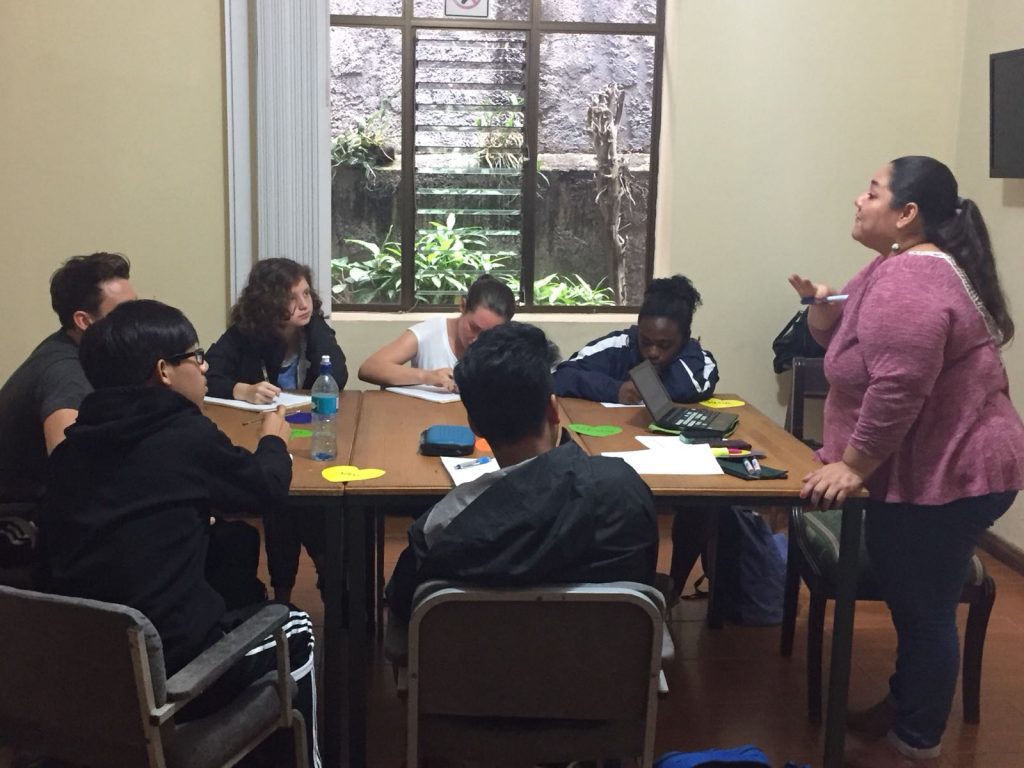
Classroom hours matter. Structured lessons help teens:
- Understand grammar patterns they’re hearing
- Learn high-frequency vocabulary quickly
- Practice speaking in guided formats
- Build confidence before real-world practice
The best programs combine class + real-world use. Without structured instruction, some teens plateau early. Without real-world use, classroom learning stays theoretical.
The Role of Cultural Activities and Excursions
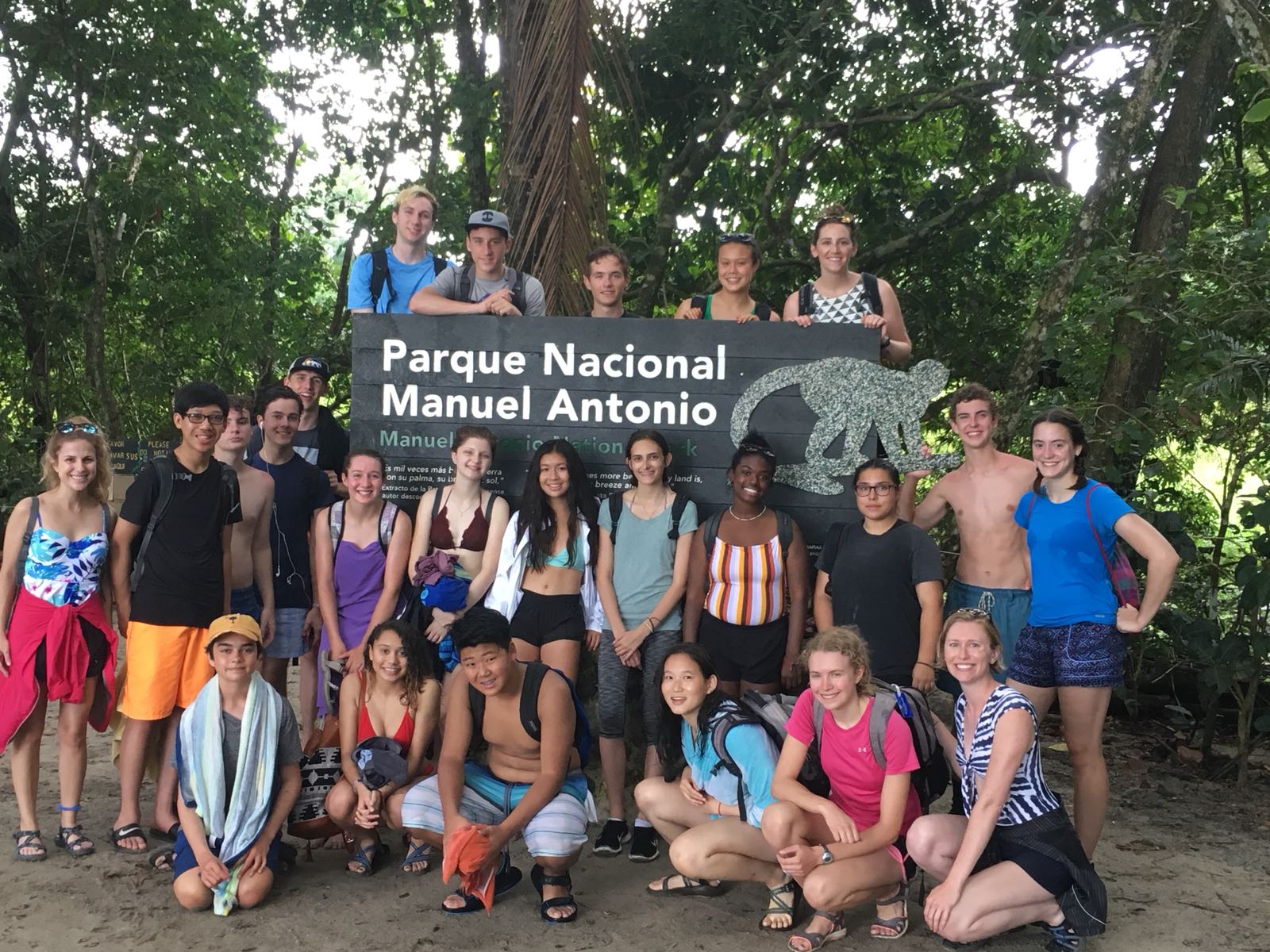
Activities matter because they create natural reasons to speak Spanish. Teens practice language when:
- Ordering food
- Asking for help
- Participating in guided tours
- Navigating a schedule
- Talking with peers and staff in Spanish
When activities are designed to require communication, improvement is usually faster.
What “Improvement” Actually Looks Like
Many families expect immersion to produce perfect grammar. In practice, improvement often shows up as:
- Faster comprehension
- Less hesitation while speaking
- Better pronunciation and rhythm
- More comfort with conversation
- Larger everyday vocabulary
- Ability to handle real interactions
These are the building blocks of fluency. They’re often more valuable than perfect accuracy at first.
Realistic Progress by Starting Level
Beginners often finish with survival Spanish and conversation basics: greetings, daily needs, simple questions, and improved listening. They also gain confidence.
Intermediate learners often gain fluency momentum: longer conversation, improved accuracy, better comprehension at speed, and stronger vocabulary.
Advanced learners often improve in nuance, speed, and confidence in complex topics. They may gain better cultural competence and more natural phrasing.
How to Help a Teen Improve Faster During Immersion
If the goal is faster progress, a few habits matter:
- Speak Spanish early in the day to build momentum
- Practice “scripts” for common situations (ordering, greetings, questions)
- Ask for clarification instead of switching to English
- Keep a small notebook of high-frequency phrases
- Review daily vocabulary briefly each night
- Choose at least one daily “challenge conversation”
These habits support consistent progress without overwhelming the teen.
Common Ground International
Impacting Communities Through Language
© 2026. All Rights Reserved.
(888) 879-2575