
Category: Bilingual Workplace
3 Spanish Translation Tips
26th December
3 Spanish Translation Tips:
It’s important to get your Spanish translation right the first time. Since your document is a representation of you or your company (and you can’t personally vouch for the Spanish version of your document), it’s a good idea to make sure that your Spanish document is translated correctly by a qualified Spanish translator. Here are 3 tips to help you have a successful Spanish translation:
Know who your target audience. Often it’s easy to forget about your target audience when you’re focusing on conveying the information that you want to get across, but it’s important. A professional translator will translate your document in the same register (or “language level” – which relates to educational level) that your source document is written. If your target audience for your English document is the same demographic as your target audience for … Read More »
Onsite English Classes: 3 Necessities for Success!
27th March
3 Essential components for a successful English class at your workplace
We’re always excited when a new client inquires about offering an English classes to their employees, and we’re equally surprised by many corporations’ willingness to implement a hasty plan and be satisfied with a “trial and error” approach to language training.
At Common Ground we specialize in offering industry specific language classes, and our years of experience have taught us that the following 3 suggestions are essential for a successful language class:
Select your students carefully: Not every employee is right for the English class you are putting together. You don’t have unlimited time, nor do you have an unlimited budget; so you need to identify the group of employees who have the best chance for success within your time frame and budget. Course “success” can be defined in any way you … Read More »
The Case for a Professional Spanish Translation
7th March
We don’t need to contract a professional Spanish translation for this document – we habla español!
Unfortunately this reluctance to pay for a professional translation is common in the workplace today. It’s tempting to think of potential savings by not hiring out your translation to a professional, but in the end it usually makes sense to spend a little on your documents - especially if the public will be seeing them. In a large majority of the cases, we’re talking about a $50 – $250 savings by doing the work in house with your own staff; and the risk you run is damaging your professional image by allowing misspellings and mistakes in your documents.
Here are 3 good reasons to hire out your next Spanish translation job:
Avoid simple spelling and grammar mistakes in Spanish that make your business look uneducated and unprofessional. I’m always … Read More »
Re: Still waiting for your reply…business and Latino culture
5th May
Doing business with Latinos in another country or first-generation Latino businesses here in the States? Let’s talk about business and Latino culture:
See if this scenario rings a bell:
You meet with a Latino colleague or client and have a wonderfully productive meeting – you really click, and enjoy chatting long after business is done. Then, you email him or her to follow up on your meeting with a few questions. Days go by. You get no reply, or perhaps a 1-2 line reply that doesn’t really address the issue at hand. You’re left wondering what happened…
If this sounds familiar, you’re not alone. Your Latino counterpart (probably) didn’t mean to blow you off. Of course there could be many reasons for the lack of reply, but most likely the personalismo that made your meeting so enjoyable also left your inbox empty.
Let me … Read More »
Making sense of the 2010 US Census: Hispanic population projections
11th April
What the 2010 US census numbers might (not) mean…
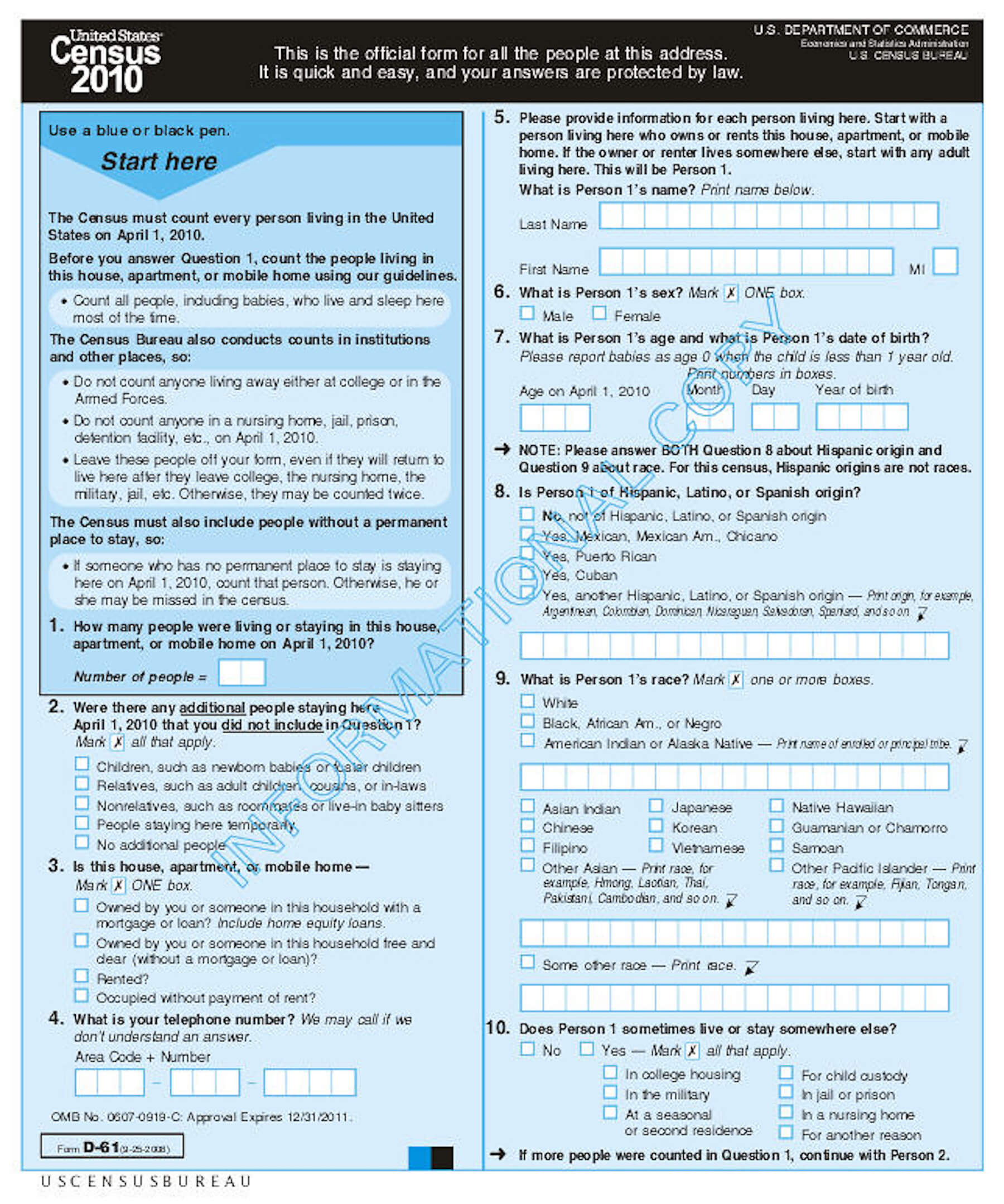
The 2010 US Census received a huge amount of publicity, and along with it, projections about the Hispanic population – the largest minority population in the United States. While the often-cited percentages of the Hispanic population are impressive testaments to the growth of this group (15% of the U.S. population now – expected to triple in number by 2050), the numbers may not mean what people think, especially in terms of business.
Who is Hispanic?
First off, the term “Hispanic” or “Latino” as defined by the Census Bureau refers to ethnicity, not race. Specifically, a Hispanic person is one who traces his or her origins to Mexico, Cuba, Puerto Rico, Spanish-speaking countries of Central and South America, or other Spanish cultures. These people may be of any race (white, black, etc.), but they … Read More »
You know you have workplace language issues if…
1st March
As the Latino population in the United States grows, no business, sector, or industry remains unaffected by this huge demographic. While many businesses are adapting to and marketing to Latinos on a cultural level, there is still a significant disconnect between Spanish- and English-speakers on a linguistic level. These workplace language issues aren’t confined to any one aspect of business, but a little job-site language training can go a long way in terms of customer satisfaction, employee efficiency, and ultimately, profitability. Not sure if you really need job-site language training? Read on.
You know you have workplace language issues if…
1) You and your team are constantly relying on a few bilingual employees for help understanding Spanish-speaking clients, patients, or fellow employees. Using employees as interpreters is a very risky proposal. Not only does it put undue pressure on the bilingual employee, … Read More »
From Personalismo to Confianza: Building relationships and Latino Culture
26th January
Overarching ideas in Latino culture
Whether or not you do business internationally, chances are you work with Latinos in some capacity, be they clients, employees, or colleagues, and therefore deal with the differences found in Latino culture.
In the business world, the differences between Latino and mainstream U.S. culture are visible in everything from employee management to negotiation style. While Latino cultural tendencies can range from the paternalism of supervisors to familismo among medical patients, most can be traced back to a basic cultural value: Personalismo.
Personalismo in practice is an emphasis on politeness and courtesy, and establishing a good rapport with someone — a personal connection — before getting down to business or the task at hand. However, personalismo is more than just making polite conversation at the beginning of a meeting. As stated by Dr. Fernando Mederos, at a deeper level … Read More »
Latino customer relations & loyalty
2nd September
Cultural Values: Working with Latinos
When we talked about agreeableness in the medical setting, we saw how the “cultural taboo against expressing negative feelings directly” translated into misunderstandings and ultimately, patient non-compliance. From a marketing standpoint, however, this same taboo can mean that it’s tough to know how your clients and customers really feel about what they’re receiving.
This was illustrated in a recent study by Savitz Research, which showed that Latinos give higher ratings than non-Latinos in product surveys. As Jeffry Savitz, President of Savitz Research, explained, “Hispanics are taught from an early age that it is in poor taste or inappropriate to openly criticize or berate when asked their opinions.” Some might find it surprising that a form of agreeableness even carries over to a survey designed to gather candid opinions. Such is the power of culture.
Given that many Latinos … Read More »
Reaching Latino Clients and Consumers
16th July
Making a connection with Latino clients and consumers
Since we started our blog, we’ve addressed cultural issues that arise with both Latino patients and employees across many industries. We have attempted to illuminate some of these issues by viewing them in terms of Latino cultural values like familismo, personalismo, respeto, and paternalism. We will now devote some time to another aspect of the Latino “market reality” – reaching Latino clients.
While connecting with Latinos as consumers implies a completely different kind of relationship than what we’ve discussed, many of the same cultural values color that relationship, and will come into play in new ways.
Before moving in this new direction, we think it would be useful to reiterate two of the fundamental ideas of this blog:
1) Cross-cultural communication begins with understanding your own assumptions about human beings and your own culture to avoid … Read More »
Working with Latinos: Paternalism
26th June
Working with Latinos and how to be a successful manager:
Over the years, we’ve spoken with a number of non-Latinos who manage Latino employees, but one of the most striking examples of success was the general manager of a restaurant here in Colorado. This GM had an excellent rapport with his employees, a very low turnover rate, and had even successfully mentored one of his Mexican-born employees into a management position. Most notably, he had nothing but positive things to say about working with Latinos and his Latino employees.
His secret? Attitude and empathy.
“Some people see language and cultural barriers as so big that they can’t be overcome, but it is possible. It has a lot to do with attitude,” he told us.
One of the keys to success had been his understanding of personalismo- connecting with his employees on a personal level. … Read More »